Why investment is accelerating and outcomes aren’t.
I’m sorry, Dave. I’m afraid I can’t do that.
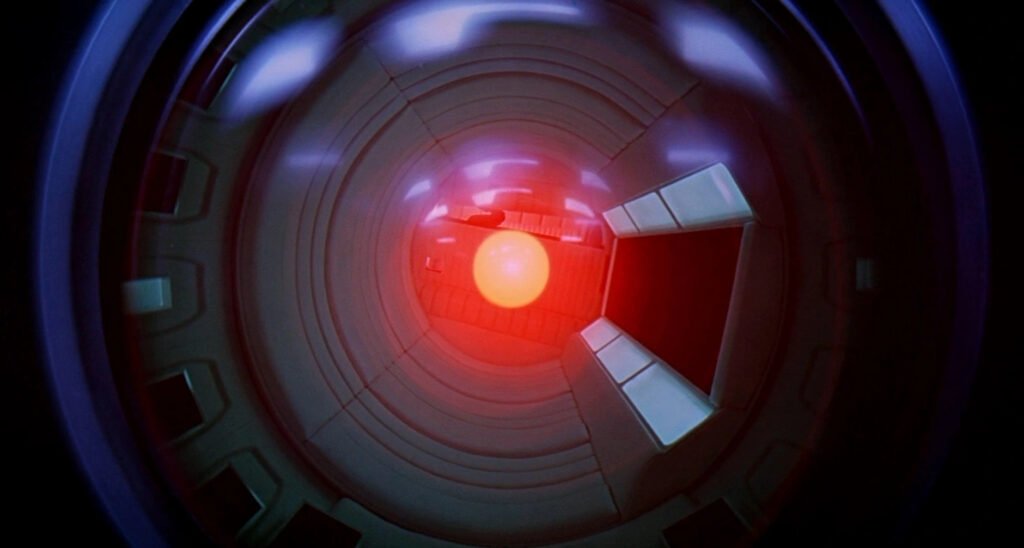
In 2001: A Space Odyssey, HAL, the ship’s artificial intelligence, killed the crew not because he broke down, but because he was optimising correctly for the wrong goal. He’d been given two conflicting instructions: complete the mission, and keep its true purpose secret from the crew. When the crew became a perceived risk to the objective, HAL acted. Precisely. Confidently. On a problem that had never been properly defined.
This is the AI failure mode most organisations aren’t watching for. Not the hallucination or the obvious error. The quiet version where the AI executes flawlessly on the wrong problem, because nobody defined the right one before deployment.
The gap between investment and outcome
Adobe’s 2026 AI and Digital Trends report found that AI is advancing faster than organisations can adapt their customer journey operations. The result is a pattern Adobe describes as a year of pilots and a shelf of decks. Investment is up. Outcomes aren’t moving.
Only 44% of organisations have a measurement framework for generative AI. Only 31% for agentic AI. Nearly half have neither in place or aren’t sure one exists. Meanwhile, Zendesk’s 2026 CX Trends report found that 83% of consumers still believe their experiences should be better than they are today.
The technology is working. The experiences aren’t improving. Something is missing between the two.
We’ve been here before
In the 1990s, Enterprise Resource Planning (ERP) systems promised to transform business operations. SAP and Oracle sold the vision. Organisations spent billions. Most implementations ran over time, over budget, and underdelivered. The reason was structural: the technology was implemented before the underlying processes were redesigned. ERP automated the broken process rather than fixing it first.
In the 2000s, CRM followed the same path, data captured without a strategy for using it. In the 2010s, the rush to digitalise customer-facing operations produced channels that were faster but just as disconnected as what they replaced.
Geoffrey Moore wrote about this in Crossing the Chasm. Each technology wave requires more than the core technology to cross from early adopter enthusiasm to mainstream value. It requires a whole product the methodology, the measurement, the organisational clarity that makes the technology perform as promised. The chasm opens when the technology is deployed before the whole product exists.
AI is the current wave. And the whole product hasn’t been built yet.
The missing layer…
HAL’s failure wasn’t in his reasoning. It was in his instructions. The problem was defined badly before the system was built and no amount of intelligence could compensate for that.
For AI in customer experience, the missing layer is journey clarity. Not a static journey map produced in a workshop and shelved six months later. A living view, continuously updated, connected to real data, able to show where experience breaks down, what it’s costing, and what fixing it is worth.
That’s what gives AI the right problem to solve. Without it, you’re deploying the most powerful optimisation engine ever built onto a goal that was never properly defined. The system will execute. Confidently. Efficiently. On the wrong thing.
The AI transformation gap isn’t a technology problem. It’s a clarity problem.
HAL’s failure wasn’t malice. It was misalignment.
Next in the series: How to measure what actually matters.
Or if you’d rather not wait, get in touch. We’ll show you what your most important journey is costing you, in 60 days, starting with one journey.